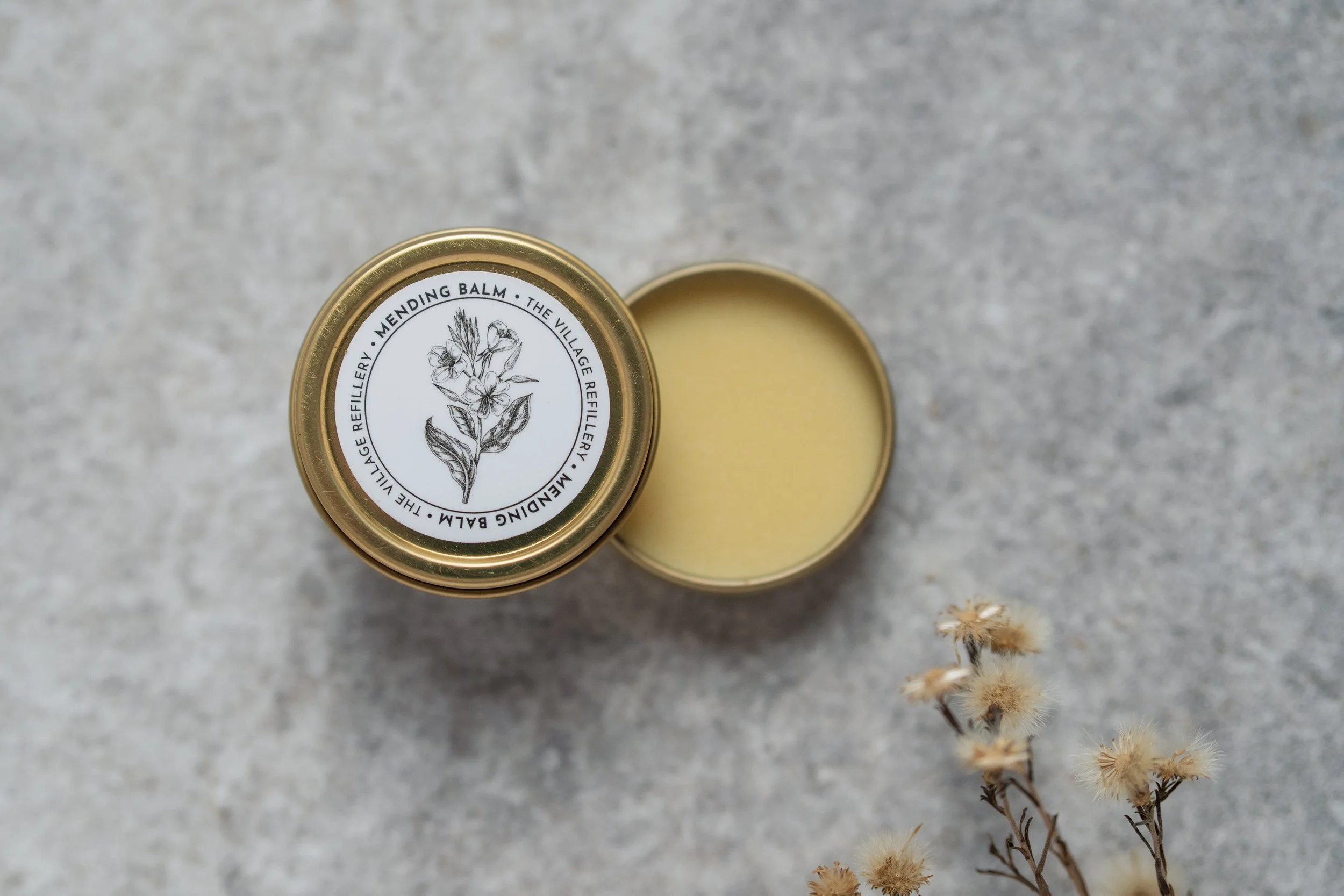
Mending Balm

$14.00

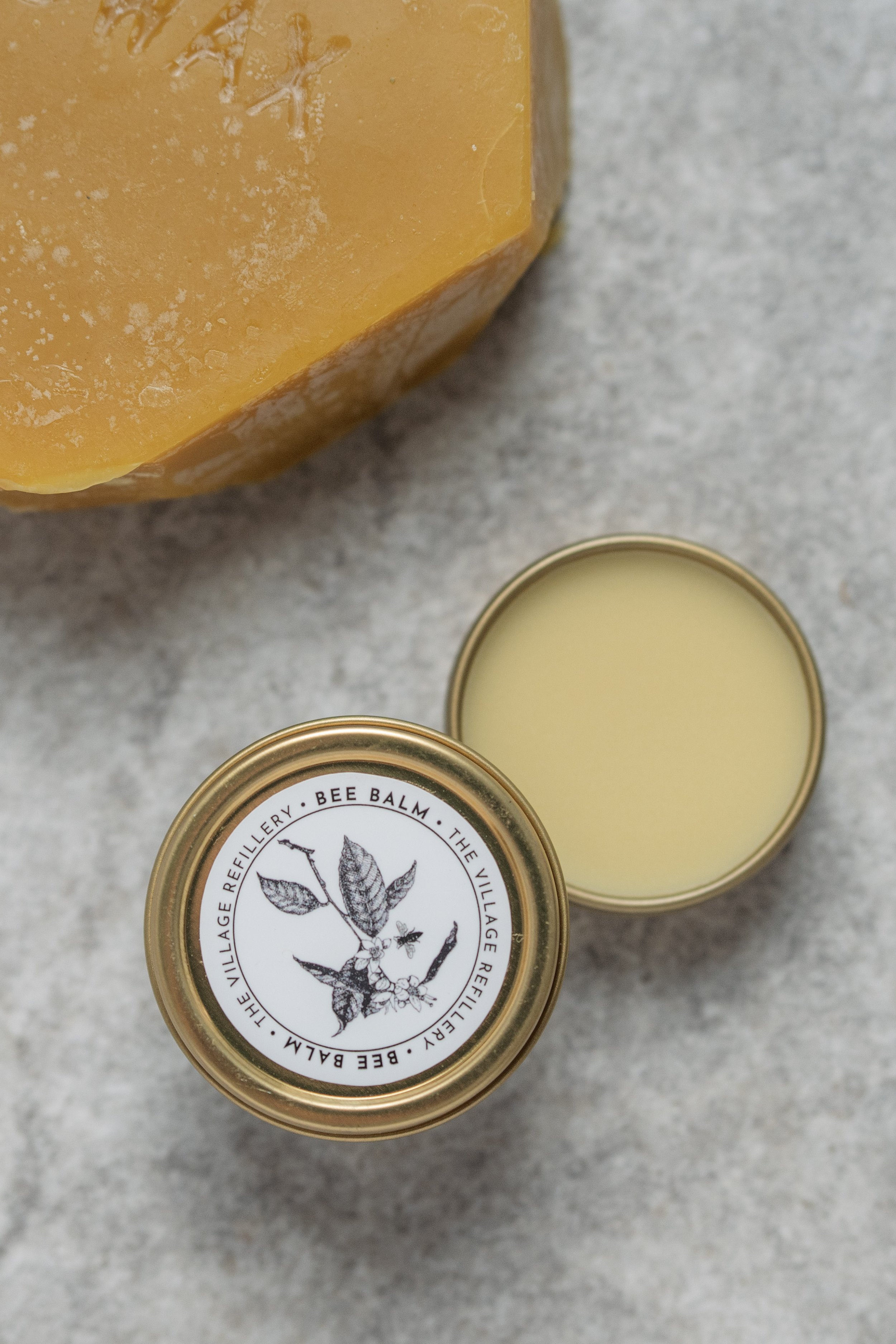
VR mending balm is intended for damaged or injured skin and used to promote wound healing & scar mobility. When applied while wounded tissue is still supple, our mending balm can reduce the likelihood of scarring and adhesions that lead to muscular tension.

Perfect for on:

  • precancerous spots that have received cryotherapy

  • perineal tears endured during childbirth

  • surgical wounds (e.g. cesarean, hysterectomy, etc.)

  • new tattoos

  • eczema & psoriasis patches

  • ‍everyday cuts or scrapes

How it works:

VR mending balm is made predominantly from organic evening primrose oil (EPO), a potent, natural source of omega-6 fatty acids. Research has shown that when EPO is applied topically to wounds, it induces early deposition of collagen, assists with new blood vessel formation, and modulates the inflammation process central to wound healing (1).

The addition of cocoa butter, calendula, and vitamin E oil to our formula further enhance this balm’s skin-nourishing qualities, while essential oils of rosemary, frankincense, and tea tree add anti-microbial properties.

Beyond mending wounds, this balm works wonders for dry skin and can be used on chaffed, cracked, or chapped areas including lips.

Sources:

  1. https://pubmed.ncbi.nlm.nih.gov/29667150/

VR mending balm is intended for damaged or injured skin and used to promote wound healing & scar mobility. When applied while wounded tissue is still supple, our mending balm can reduce the likelihood of scarring and adhesions that lead to muscular tension.

Perfect for on:

  • precancerous spots that have received cryotherapy

  • perineal tears endured during childbirth

  • surgical wounds (e.g. cesarean, hysterectomy, etc.)

  • new tattoos

  • eczema & psoriasis patches

  • ‍everyday cuts or scrapes

How it works:

VR mending balm is made predominantly from organic evening primrose oil (EPO), a potent, natural source of omega-6 fatty acids. Research has shown that when EPO is applied topically to wounds, it induces early deposition of collagen, assists with new blood vessel formation, and modulates the inflammation process central to wound healing (1).

The addition of cocoa butter, calendula, and vitamin E oil to our formula further enhance this balm’s skin-nourishing qualities, while essential oils of rosemary, frankincense, and tea tree add anti-microbial properties.

Beyond mending wounds, this balm works wonders for dry skin and can be used on chaffed, cracked, or chapped areas including lips.

Sources:

  1. https://pubmed.ncbi.nlm.nih.gov/29667150/

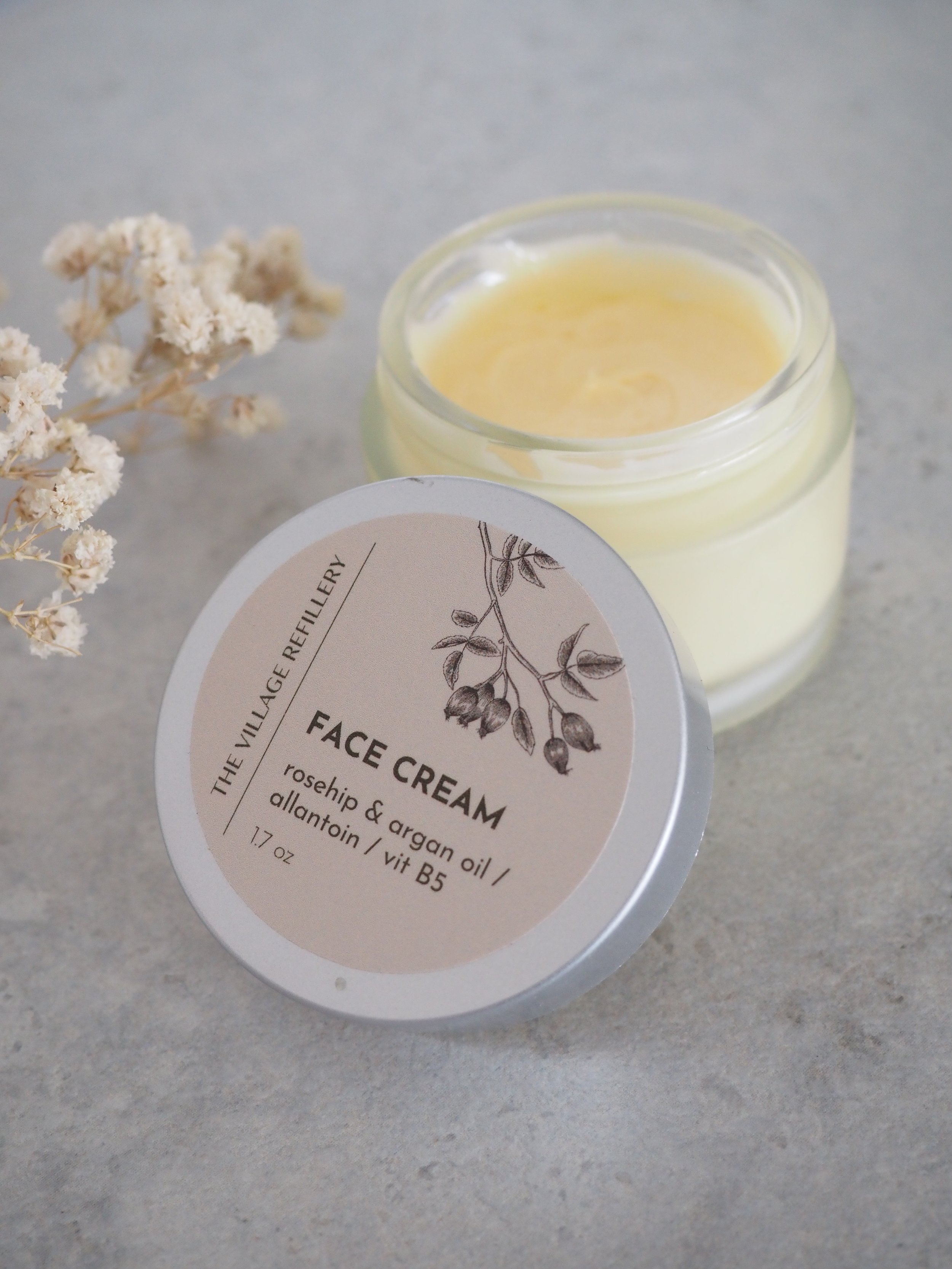
Face Cream Face Cream Face Cream
Scent:
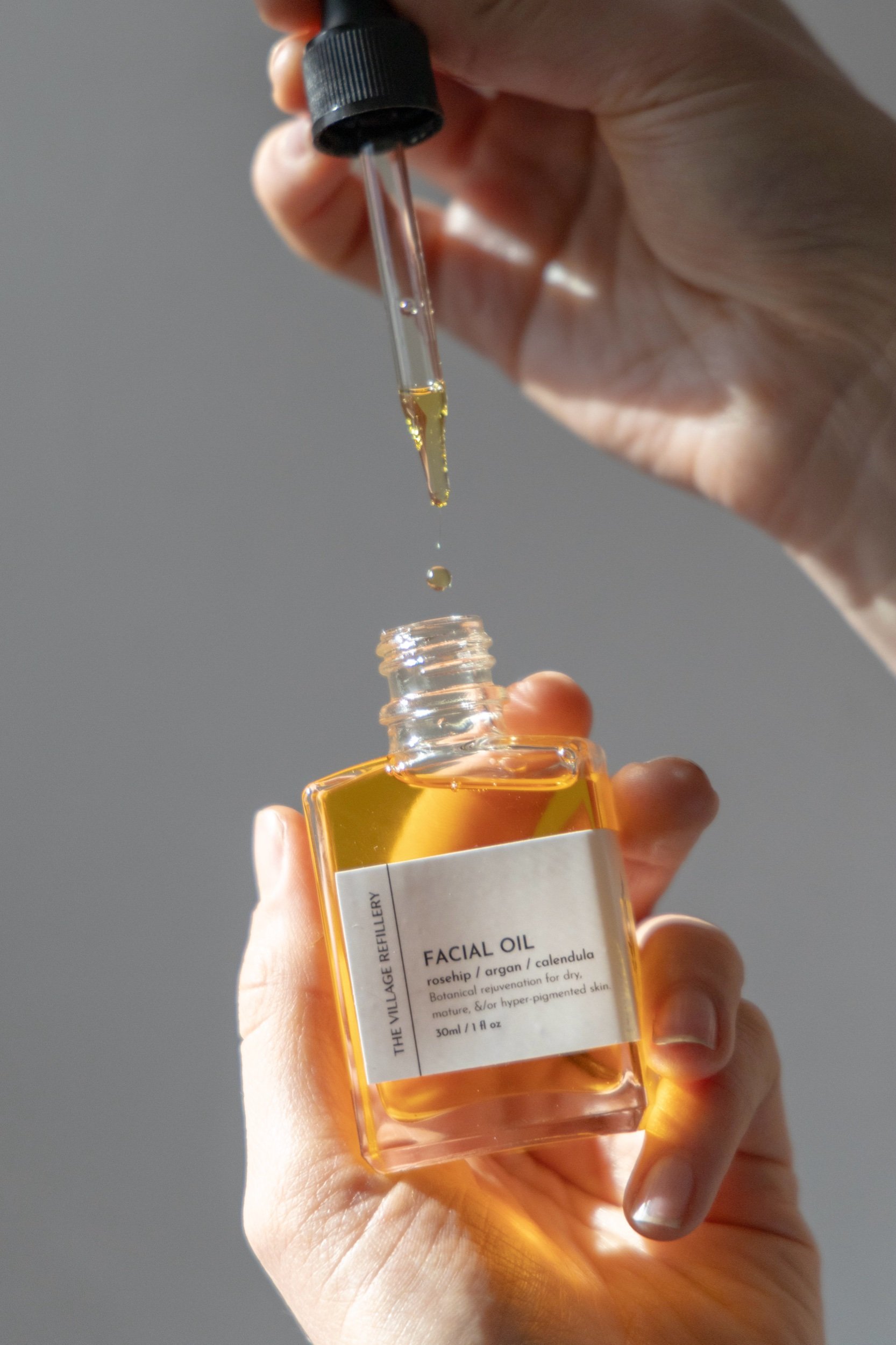
Botanical Facial Oil
  • Using clean fingers, apply topically to healing wounds once skin is intact (i.e. initial wound closure has occurred). Do not apply to broken skin. Massage gentle in circular motions, gradually applying more pressure as scar tissue softens. For best results, apply 2-3 times a day while massaging for 5-10 minutes each time.

  • Unrefined fair-trade shea butter*, cold-pressed evening primrose oil*, meadowfoam oil*, unrefined cocoa butter*, unrefined kokum butter*; NM beeswax; vitamin E oil*; essential oils of lavender, rosemary, frankincense, tea tree; calendula extract.

    *organic ingredient

  • 1oz gold metal tin (food grade) with screw top lid. Reusable, or recyclable at end of life.
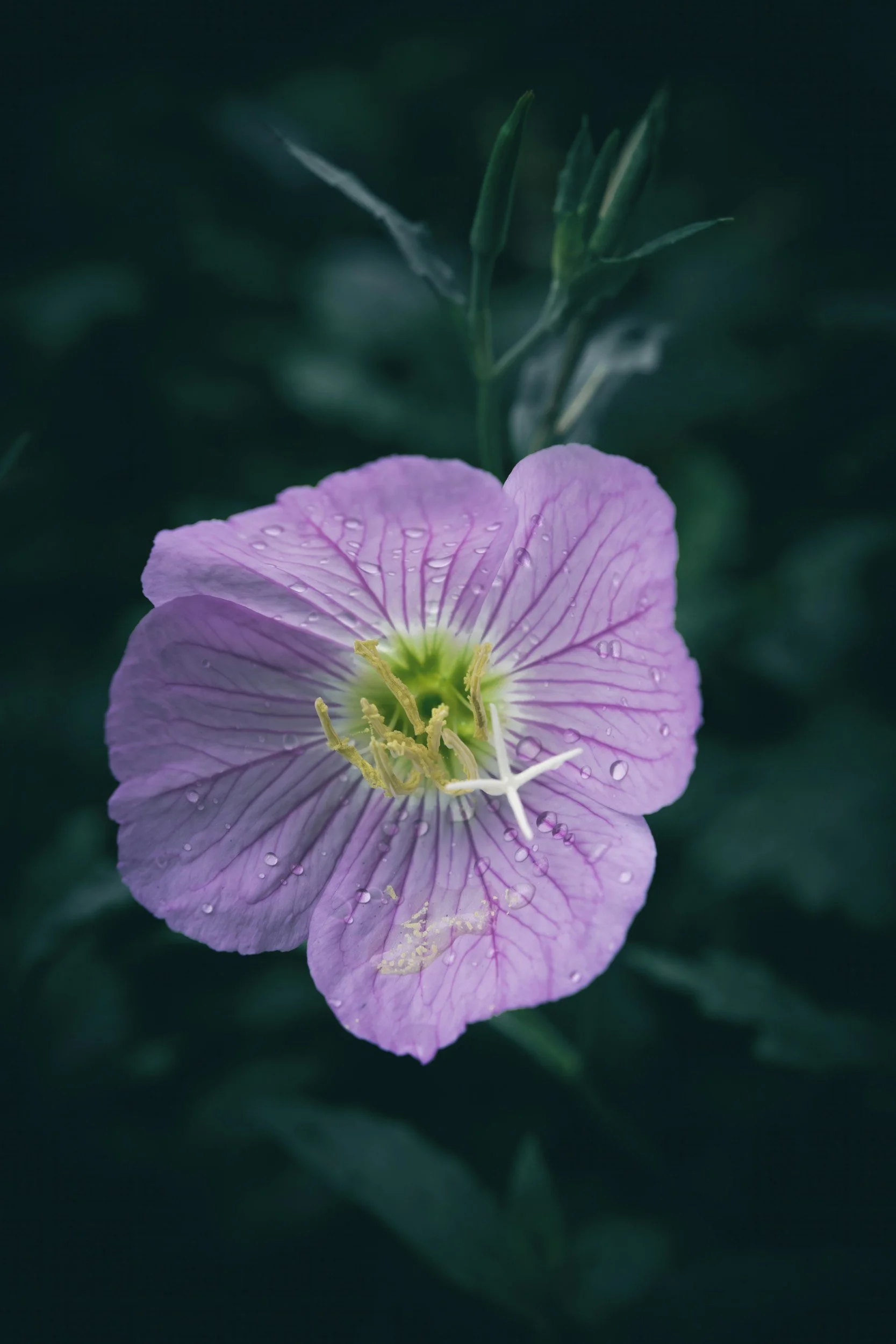
Evening primrose (Oenothera biennis) is a perennial wildflower native to North America, recognizable by its tall, branching stems, lance-shaped leaves, and delicate four-petaled flowers that open in the evening and range from pale yellow to pink. Blooms give way to slender seed pods that persist through the season, providing habitat and food for pollinators such as moths, bees, and beneficial insects. Its seeds are prized for a rich oil high in gamma-linolenic acid (GLA), used in natural skincare and supplements for anti-inflammatory and skin-nourishing properties.

Sustainability aspects:

  • Low-input cultivation: evening primrose thrives in moisture-poor, well-drained soils and drought-prone sites, reducing the need for irrigation, fertilizers, and pesticides.

  • Pollinator support: nighttime-blooming flowers provide nectar for nocturnal pollinators, enhancing local biodiversity.

  • Native plant benefits: where grown regionally, it supports local ecosystems and requires fewer resources than nonnative ornamentals.

  • Seed oil use: small-batch, cold-pressed evening primrose oil supports circular, low-waste production when sourced from responsible growers and used in concentrated formulations.

  • Natural fiber and seed retention: the plant’s seed pods and biomass can be left to decompose on-site or used as mulch, returning nutrients to soil and minimizing waste.